
Nixtamalization Classes in Austin, Texas
The Process That Made Corn Civilizations Possible (And Why We Do It)
We are as passionate about our corn as we are about our wheat. And why wouldn't we be. Corn is king in Texas cuisine. It is in the tamales on every holiday table, the pozole that warms you through winter, the tortillas that show up at every meal, whether in the form of a taco or fresh with butter. Corn is not a side note in this part of the world. It is the story.
And the process that turns it into masa, into tortillas, into something worth gathering around, is one we think every serious taco lover deserves to understand.

What is Nixtamalization?
Nixtamalization is the process of soaking and cooking dried corn in an alkaline solution, usually water and calcium hydroxide, also called slaked lime. It softens the outer hull of the kernel, unlocks nutrients that would otherwise pass through the body unused, and transforms the corn into something it could not become on its own. That something is masa, the foundation of tortillas, tamales, and countless other foods that have fed people for thousands of years.
Without this process, you cannot make a real tortilla. The corn will not bind. Nixtamalization is not a step in the recipe. It is the reason the recipe exists.
Where It Came From
This process was not developed in a lab or discovered by food scientists. It was worked out slowly, through everyday experimentation, by Indigenous peoples in Mesoamerica, in what is now Mexico and Guatemala, at least 3,000 years ago. The Maya used it. The Aztecs used it. Cultures across the Americas refined it and carried it forward for millennia.
It very likely began as a happy accident. Corn cooked near limestone or ash, water turned alkaline, and something changed. Someone noticed the change and kept at it until a practice became a tradition. That tradition is still with us today at the table.
Why It Mattered. Why It Still Does.
Nixtamalization literally made corn-based civilizations possible. It unlocked niacin, also known as Vitamin B3, which prevented pellagra, a devastating deficiency disease. It improved protein availability and added calcium from the lime. Without this process, populations relying on corn as a staple can become malnourished even if they are eating enough calories.
When the Spanish brought corn back to Europe in the 16th century, they brought the grain but not the knowledge of how to prepare it. Pellagra epidemics followed across Europe and parts of the American South. In communities where nixtamalization was still practiced, it was virtually unknown. The difference was this process.

Why We Teach Nixtamalization at Barton Springs Mill
Nixtamalization connects people to the land the corn was grown on, links the past to the present through Indigenous knowledge that is still in active use, and ties nutrition to culture in a way that is both practical and profound. It is often prepared collectively, and that matters too.
We teach it because we believe making food is more than following a recipe. It is connection, to the people across the table and to the people who figured this out long before any of us were here. Credit belongs to them. We just want to make sure the story is passed along.

Come Learn Nixtamalization With Us in June!
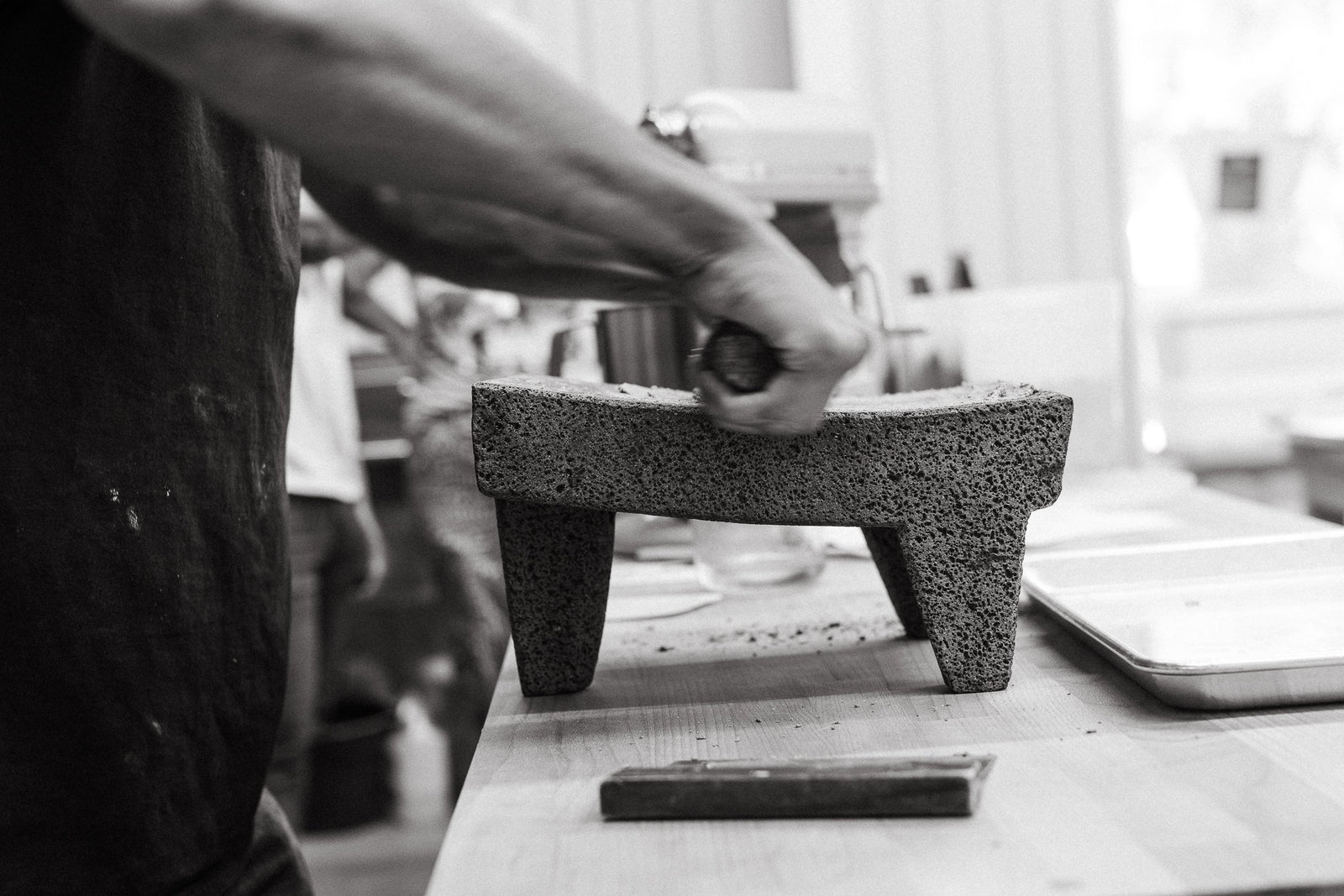
On June 20th, we are hosting a Nixta Brunch here at the mill, led by Nadia Rodriguez, our Education Center Assistant Director. This is a hands-on class in every sense. You will follow the nixtamalization process from dry raw corn all the way to luscious masa, grind corn by hand on metates that have been passed down through generations, and cook a full brunch menu together.
On the table: fluffy masa pancakes with a deep corn aroma, a savory hominy hash, and a tender masa-infused galette. You will also tour the mill with our education team and receive a 15% discount on BSM products purchased during class.

Nadia received her culinary degree in 2018 and brings over twelve years of experience across savory and pastry disciplines. Her cooking is rooted in Italian, Asian, and Latin cuisines, and her approach is straightforward: cook with the seasons, bring intention to your ingredients, and great food will follow. She learned early, cooking alongside her grandmother, that food is one of the most powerful ways to share love. That comes through in every class she teaches.
Here is what people said after our last Nixta Brunch:
"Who knew masa pancakes were so good? If you get the chance to take a class with Nadia, I highly recommend it. She's the perfect blend of teacher, food lover and chef." — Mark
"This was such a fun experience. Nadia was fun and you could really tell how passionate she is. We learned so much, plus the food was delicious!" — Tiffany
"Great class with my wife. Nadia is beyond knowledgeable and prepared. Loved the experience, the tour and the atmosphere." — Chris
Come hungry. BYOB welcome for guests 21 and up. Spots are limited. SIGN UP HERE!